UF Institute of Food and Agricultural Sciences logo
Give      University of Florida
Resources
    Toggle Search Form
    GIVE UNIVERSITY OF FLORIDA
    • HOME
    • About Us
          • About Us
          • Contact
          • People
          • Seminars & Events
          • Department Forms & Resources
        •  
    • Research
          • Research Labs
          • Research Publications
        •  
    • Undergraduate
          • On Campus
          • Online
        •  
    • Master's & Graduate Certificates
          • M.S. Medical Microbiology and Biochemistry
          • M.S. Microbiome in Health and Disease
          • Medical Microbiology Certificate
          • Microbiome and Health Certificate
          • Clinical Laboratory Microbiologist Certificate
          • Environmental Microbiology Certificate
          • Non-Degree Graduate Courses
        •  
    • Doctoral
          • On Campus Ph.D.
          • Distance Ph.D.
        •  
    • Student Resources & Advising
          • Academic Advising
          • Admission Requirements
          • Registration
          • Tuition
          • Program ROI
          • Critical Dates & Deadlines
          • Course Catalog
          • FAQs
        •  
    • Apply

    Microbiology & Cell Science

    Microbiology & Cell Science

    Microbiology & Cell Science Careers


    Discover careers built for curiosity, exploration and the weird and wild world of microbes

    Microbiology & Cell Science Careers


    Discover careers built for curiosity, exploration and the weird and wild world of microbes

    CAREERS OVERVIEW

    Turn Your Degree Into a Career

    Microbes exist everywhere, which means microbiologists do too.

    From hospitals and biotech startups to glaciers, volcanoes and spacecraft, microbiology careers go far beyond the lab. Microbiologists solve problems tied to human health, agriculture, climate, food systems, biotechnology and environmental change. Some graduates work in highly technical research settings. Others lead public health programs, develop vaccines, monitor water safety, support space missions or study microbial life in extreme environments around the world.

    At the University of Florida's Department of Microbiology and Cell Science, students build the scientific foundation, research experience and real-world skills needed for careers across industry, healthcare, government, biotechnology and graduate education.

    ↓ Scroll to discover typical career paths by degree level, and explore unique opportunities that may surprise and inspire you.


    CAREERS BY DEGREE LEVEL

    Bachelor's Degree Careers
    Master's Degree Careers
    Doctoral Degree Careers


    Bachelor’s Degree Careers

    Built for hands-on science, laboratory work and industry-ready careers.

    A bachelor’s degree in microbiology prepares students for entry-level scientific careers in healthcare, biotechnology, environmental monitoring, food systems and laboratory science. Many graduates also continue into medical school, veterinary programs, graduate school or specialized certifications.

    Typical Career Paths


    Clinical & Public Health

    • Clinical laboratory technician
    • Medical laboratory scientist
    • Public health laboratory assistant
    • Diagnostic laboratory technician
    • Infection prevention support specialist

    Biotechnology & Industry

    • Biotech laboratory associate
    • Quality assurance specialist
    • Manufacturing associate
    • Research technician
    • Fermentation technician
    • Pharmaceutical production technician

    Environmental & Agricultural Science

    • Water quality analyst
    • Environmental laboratory technician
    • Food safety specialist
    • Agricultural laboratory technician
    • Environmental monitoring specialist

    Average Salary Range

    Most early-career microbiology graduates with a B.S. enter positions ranging approximately from $45,000 to $75,000 annually depending on industry, location, certifications and laboratory experience.

    ➜ Explore on-campus and online B.S. programs in Microbiology and Cell Science at UF


    Master’s Degree Careers

    Built for leadership, specialization and advanced scientific problem solving.

    A master’s degree allows students to specialize in areas like microbial genetics, biotechnology, environmental microbiology, infectious disease, genomics, bioinformatics or industrial microbiology. Graduates often move into higher-level technical, management and applied research roles.

    Typical Career Paths


    Research & Innovation

    • Research Scientist
    • Senior Research Associate
    • Genomics Specialist
    • Microbial Ecologist
    • Bioinformatics Analyst

    Biotechnology & Industry Leadership

    • Bioprocess Scientist
    • Biotechnology Project Manager
    • Quality Systems Manager
    • Validation Specialist
    • Regulatory Affairs Specialist

    Public Health & Government

    • Public Health Microbiologist
    • Epidemiology Laboratory Specialist
    • Biosafety Coordinator
    • Environmental Microbiologist
    • State Laboratory Scientist

    Average Salary Range

    Professionals with an M.S. in microbiology commonly earn approximately $65,000 to $110,000+ depending on specialization, experience, geographic region and industry sector.

    ➜ Learn more about both concentrations in the fully online M.S. program in Microbiology and Cell Science at UF


    Ph.D. Careers

    Built for discovery, innovation and leading the future of science.

    Doctoral graduates in microbiology lead advanced research programs in academia, biotechnology, pharmaceuticals, government agencies and emerging technology sectors. Ph.D.-level scientists design studies, publish research, direct laboratories and develop solutions to global challenges.

    Typical Career Paths


    Research & Academia

    • Principal investigator
    • University professor
    • Research faculty scientist
    • Laboratory director
    • Postdoctoral researcher

    Biotechnology & Pharmaceutical Innovation

    • Senior scientist
    • Director of research and development
    • Translational scientist
    • Genomics program lead
    • Drug discovery scientist

    Government & Policy

    • CDC scientist
    • NIH researcher
    • Science advisor
    • Biosafety officer
    • Regulatory science specialist

    Average Salary Range

    Ph.D. level microbiologists frequently earn approximately $90,000 to $180,000+ depending on sector, leadership responsibilities, grant funding, publications and specialization.

    ➜ Explore on-campus and distance Ph.D. programs in Microbiology and Cell Science at UF


    CAREERS BY INTEREST

    Microbiology in the Wild

    Exploration. Discovery. Extreme environments.

    Some laboratories have four walls. Others span oceans, ice sheets and volcanic landscapes. From caves and glaciers to launch facilities and research vessels, microbiologists follow microbes wherever they thrive.


    Cave & Subsurface Exploration

    Investigate caves and underground ecosystems to study microbial diversity, geological systems and life in isolated environments.

    Volcano & Geothermal Systems

    Study heat-resistant microbes living in volcanic and hydrothermal environments to understand early life and biotechnology applications.

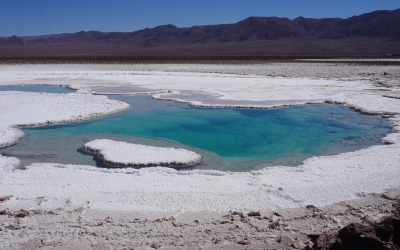
    Desert & Extreme Environments

    Study organisms that survive intense heat, drought and radiation to better understand resilience, adaptation and the limits of microbial life.

    Space & Astrobiology

    Contribute to aerospace research by studying microbial survival in space, planetary protection and closed life-support systems.

    Polar & Glacier Research

    Collect microbial samples from ice sheets, permafrost and polar ecosystems to study climate change and microbial adaptation.

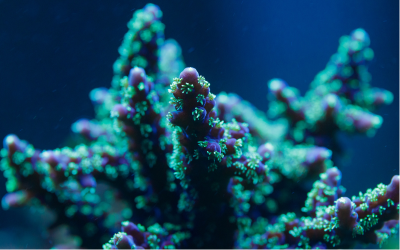
    Marine & Deep Ocean Science

    Work aboard research vessels studying ocean ecosystems, coral microbiomes and deep-sea microbial life.


    Alternate Microbiology Careers

    Communication. Technology. Leadership.

    A microbiology degree opens doors far beyond traditional research and laboratory careers. Graduates also work in business, communications, policy, technology and entrepreneurship, applying scientific thinking to challenges across industries.

    • Science & Communication
      • Science communication
      • Scientific illustration
      • Medical and technical writing
      • Museum and science education
      • Scientific media production
    • Business & Industry
      • Biotechnology sales
      • Pharmaceutical marketing
      • Regulatory affairs
      • Patent law
      • Sustainability consulting
    • Data, Technology & Emerging Fields
      • Bioinformatics
      • Wildlife and conservation science
      • Brewing and fermentation industries
      • Science policy

    Career Outlook

    Human curiosity. Human expertise. Human impact.

    As technology continues to transform science, the demand for professionals who can design experiments, interpret complex biological systems and apply scientific judgment remains strong. Microbiology combines technical expertise with critical thinking, making it a field where human insight continues to play a central role.

    According to the U.S. Bureau of Labor Statistics, employment of microbiologists is projected to grow 4% from 2024 to 2034, with approximately 1,700 job openings projected each year. The median annual wage for microbiologists reached $87,330 in 2024, with opportunities spanning healthcare, biotechnology, pharmaceuticals, environmental science, government and research.

    Scientists with expertise in microbiology, genomics, biotechnology and related life sciences are helping drive innovation in areas ranging from public health and drug development to environmental sustainability and emerging technologies. Demand is expected to continue as organizations seek professionals who can translate scientific data into real-world solutions.


    Discovery Starts at UF

    Whether your goal is improving public health, advancing biotechnology, protecting ecosystems or exploring some of Earth's most extreme environments, microbiology provides the scientific foundation to pursue meaningful and impactful work.

    At UF's Department of Microbiology and Cell Science, students build the knowledge, research experience and real-world perspective needed to pursue careers across healthcare, biotechnology, government, environmental science and emerging industries.

    Our graduates consistently report that the value of their education extends well beyond the classroom. In a recent alumni survey, 93% reported a positive return on investment, 95% were satisfied with the knowledge and skills they gained and 64% said the program prepared them to achieve their academic and professional goals.

    ➜ Explore Program ROI


    Ready to take the next step?

    ➜ Request Information About Graduate Programs and Certificates

    ➜ Explore All Programs

    ➜ Apply Now


    Follow Us On Social

    Follow Us On Social

    Life at MCS
    Updates, stories and highlights from the MCS community


    MCS Blogs

    MCS Blogs

    The latest in microbiology
    Industry and departmental updates, breakthroughs and announcements


    MCS Publications

    MCS Publications

    Research that drives discovery
    Peer-reviewed articles from MCS faculty and student researchers


    RESOURCES & SUPPORT

    FAQ

    Is microbiology only a lab career?
    No. Many roles involve fieldwork, environmental sampling and applied science.

    Is microbiology a good career path?
    Yes. It aligns with high-demand industries like biotech and public health.

    Do you need a master’s degree?
    Not always, but it expands opportunities and earning potential.

    Find answers to more frequently asked questions HERE.

    Sources

    U.S. Bureau of Labor Statistics, 2024-2034 Employment Projections

    University of Florida Logo
    Contact

    Feedback
    Microbiology & Cell Science Department
    1355 Museum Dr. Gainesville, FL, 32611 Building 981 P.O. Box 110700 Gainesville, FL 32611-0180
    (352) 392-1906

    Land Grant Mission
    • Teaching
    • Research
    • Extension
    Information
    • Ask IFAS (EDIS)
    • UF/IFAS Experts
    • UF/IFAS Blogs
    • UF/IFAS Bookstore
    • Careers
    Policy
    • Accessible UF
    • EEO Statement
    • IFAS Web Policy
    • SSN & UF Privacy
    • Analytics (Google Privacy)

    © 2025 University of Florida, IFAS Last Modified:Fri, 26 Jun 2026 09:40:57 EDT